AI Isn't Just for the Big Guys: How SMBs Can Supercharge Operations with Smarter IT Consulting
August 6, 2025 • 6 min read
Breaking the AI Myth: Small Business, Big Potential
Let's bust a myth right away: artificial intelligence isn't just for Fortune 500 companies with massive IT departments and even bigger budgets. Recent studies show that over 90% of small and medium-sized business teams are already using some form of AI, with 60% specifically adopting generative AI tools. The playing field is leveling fast.
But here's the challenge – while enterprise-level companies have dedicated teams to implement AI strategies, SMBs often struggle with limited resources, technical expertise, and clear direction. That's where strategic IT consulting becomes a game-changer, helping smaller organizations punch above their weight class in the AI arena.
At Technology Navigators, we've seen firsthand how the right approach to AI implementation can transform operations for businesses of all sizes. This isn't about implementing technology for technology's sake – it's about finding specific, high-impact solutions that address your unique business challenges.
Where AI Delivers Real Value for SMBs
When implemented strategically, AI solutions can deliver productivity gains of up to 40% for small businesses. But what does that look like in practice? Here are the areas where we've seen the most significant ROI for our SMB clients:
1. Customer Experience Enhancement
Today's customers expect personalization and immediate responses. AI makes this possible even without a massive support team:
- 24/7 Customer Support: Implement chatbots that handle basic inquiries, appointment scheduling, and first-level troubleshooting without human intervention
- Sentiment Analysis: Monitor and analyze customer feedback across channels to identify trends and improvement opportunities
- Personalized Experiences: Tailor website content, email campaigns, and product recommendations based on customer behavior
One retail client implemented a simple chatbot for their e-commerce site and saw a 35% reduction in support tickets while improving customer satisfaction scores. The best part? The entire solution cost less than hiring a part-time support agent.
2. Operational Efficiency
This is where the rubber meets the road for most SMBs – doing more with less:
- Automated Workflows: Eliminate manual data entry and repetitive tasks through intelligent process automation
- Inventory Optimization: Use predictive analytics to maintain optimal stock levels based on historical data and seasonal trends
- Document Processing: Extract information from invoices, receipts, and forms automatically with optical character recognition and natural language processing

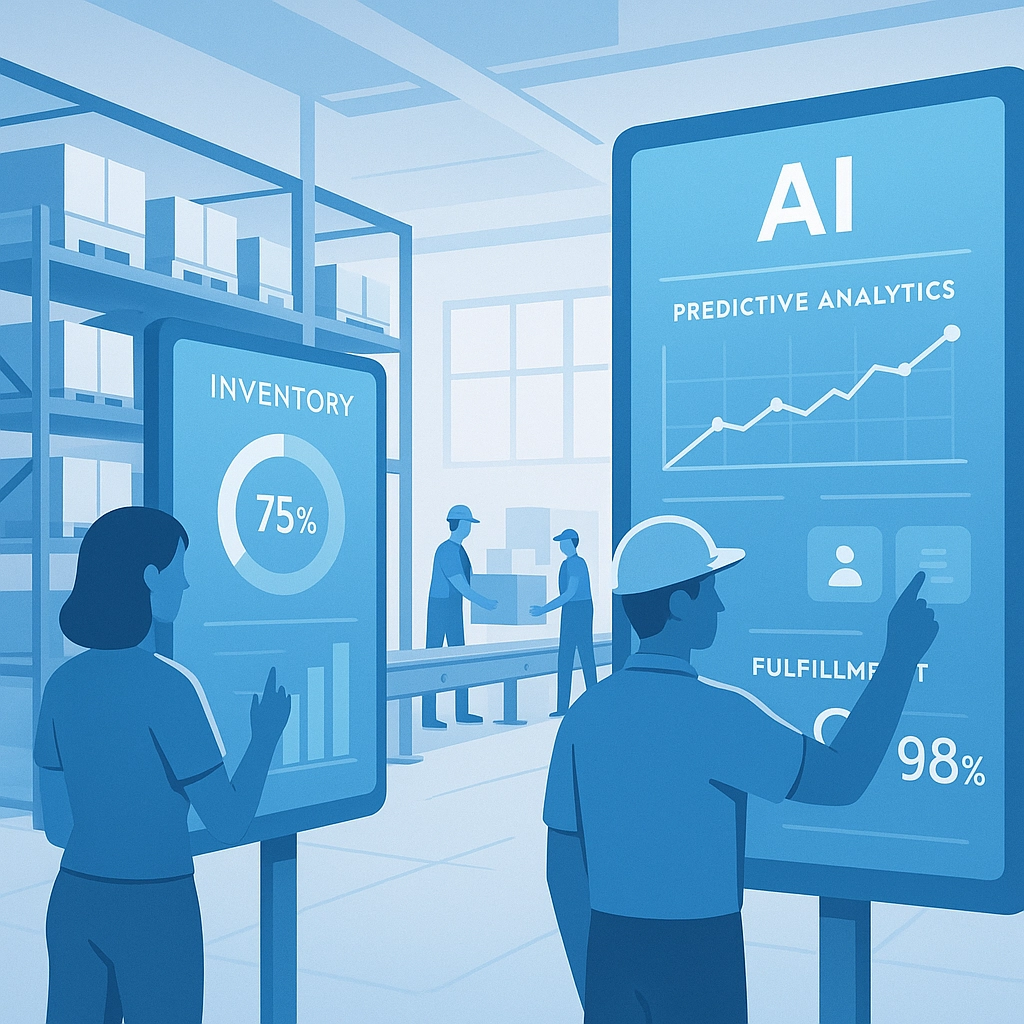
A manufacturing client used Microsoft Power BI dashboards with AI-driven insights to reduce inventory carrying costs by 23% while improving order fulfillment times. The solution paid for itself within three months.
3. Sales and Marketing Amplification
AI tools can make your marketing budget work harder and your sales team more effective:
- Lead Scoring: Prioritize prospects based on their likelihood to convert
- Content Generation: Create personalized email sequences, social media posts, and even blog drafts with AI assistance
- Market Intelligence: Monitor competitors and industry trends automatically to inform strategy
As one client put it: "We're a team of five competing against companies with 50-person marketing departments. AI is how we stay in the game."
4. Financial Management and Forecasting
Improve cash flow and make better business decisions with AI-powered financial tools:
- Cash Flow Prediction: Forecast revenue and expenses with greater accuracy
- Fraud Detection: Identify suspicious transactions before they become problems
- Expense Management: Automatically categorize and analyze spending patterns
The Smart Approach: Strategic Implementation Through IT Consulting
The key difference between successful AI implementation and expensive disappointment often comes down to strategy. Here's where the right IT consulting partner makes all the difference:
1. Start With Problems, Not Solutions
Many vendors will try to sell you the latest AI tool regardless of whether it addresses your specific challenges. A good consultant starts by understanding your business objectives and pain points, then recommends appropriate solutions.
"We don't need AI for everything," explains Tom, President at Technology Navigators. "We look for the 20% of processes where AI can deliver 80% of the value. That's how we ensure clients see meaningful ROI."
2. Choose Accessible Platforms
For most SMBs, the sweet spot is using AI capabilities already built into tools you may already have. Microsoft 365, Google Workspace, Salesforce, and QuickBooks all offer AI features that require minimal setup:
- Microsoft Copilot: Generate documents, summarize meetings, and analyze data within familiar Office apps
- Power Automate: Create simple workflow automations with no coding required
- Google's Smart Canvas: Collaborate and generate content within Google Workspace

Visit our business IT strategy page to learn more about maximizing your existing technology investments.
3. Prepare Your Data Foundation
AI is only as good as the data it works with. Before implementing sophisticated AI tools, ensure your business has:
- Clean, consistent data across systems
- Appropriate data governance and security measures
- Integration between key platforms to prevent silos
One client wanted to implement AI-driven analytics but discovered their customer data was scattered across seven different systems. We helped them unify their data first, which not only enabled AI applications but immediately improved their operations.
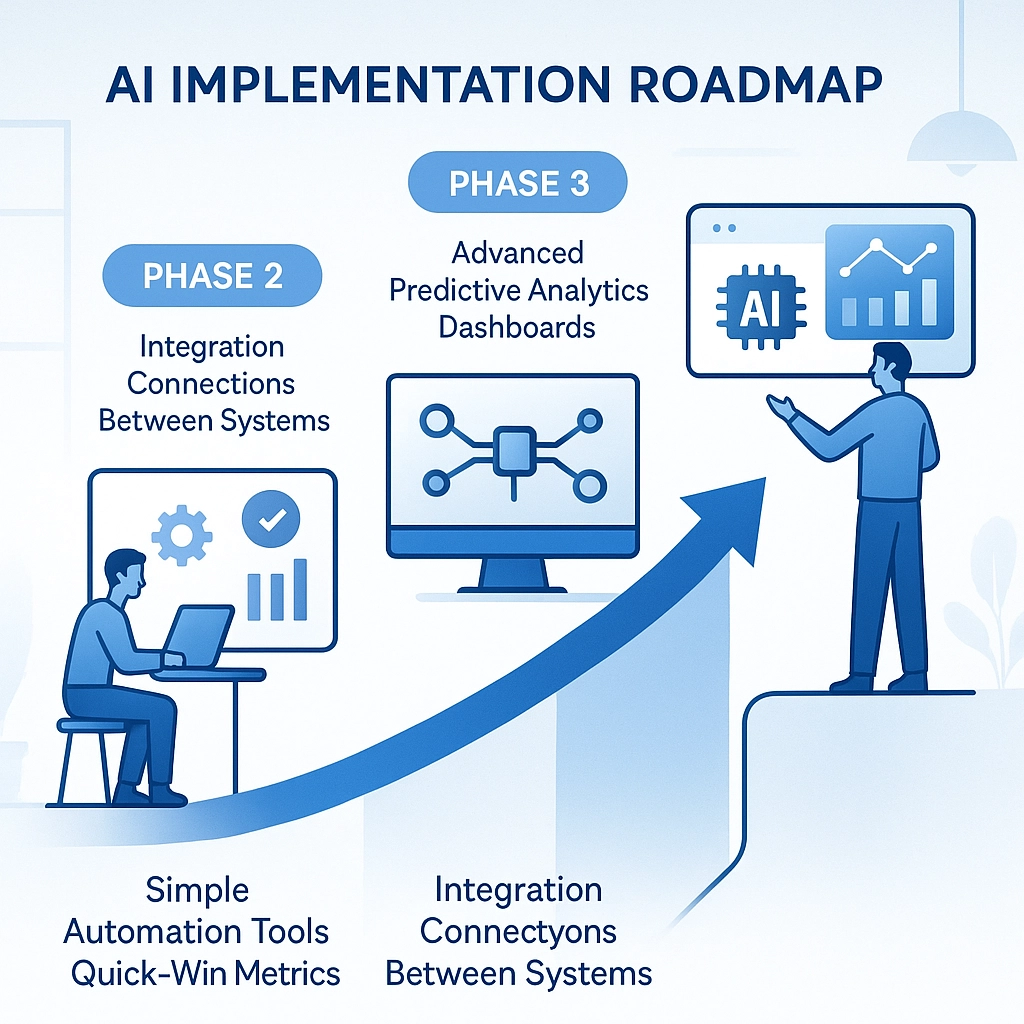
4. Build an Implementation Roadmap
Rather than trying to transform everything at once, effective AI adoption follows a phased approach:
Phase 1: Quick Wins (1-3 months)
- Implement pre-built AI solutions that require minimal customization
- Focus on automating simple, repetitive tasks
- Measure results to build internal support
Phase 2: Expand & Integrate (3-6 months)
- Connect AI solutions with core business systems
- Train staff on new workflows and capabilities
- Refine based on feedback and performance data
Phase 3: Advanced Applications (6+ months)
- Develop custom AI solutions for unique business needs
- Implement predictive analytics capabilities
- Create competitive advantages through proprietary AI applications
Real-World Success: SMBs Winning With AI
Let's look at how three different small businesses transformed their operations through strategic AI implementation:
Case Study: Professional Services Firm A 15-person accounting firm struggled with seasonal workload spikes. By implementing document processing AI and client-facing chatbots, they reduced manual data entry by 70% and improved client response times even during tax season.
Case Study: E-commerce Retailer A specialty online store used AI-powered inventory forecasting to reduce stockouts by 32% while decreasing excess inventory by 28%, significantly improving cash flow and customer satisfaction.
Case Study: Field Service Business A plumbing company implemented AI scheduling and route optimization, reducing drive times by 22% and increasing the number of service calls per day by almost 30%.
In each case, the business worked with an IT consultant to identify specific challenges, select appropriate solutions, and implement them in phases – resulting in measurable ROI within months, not years.
Getting Started: Your AI Action Plan
Ready to explore how AI can transform your business operations? Here's a simple action plan to get started:
Identify Pain Points: Make a list of repetitive tasks, bottlenecks, and areas where your team struggles to keep up with demand.
Inventory Your Tools: Many businesses already have AI capabilities in their existing software subscriptions. Review what you're already paying for before investing in new solutions.
Start Small: Choose one specific process to enhance with AI rather than attempting a complete overhaul.
Measure Results: Establish clear KPIs to track the impact of your AI implementation.
Partner Strategically: Consider working with an IT consulting firm that specializes in right-sized AI solutions for SMBs.
The most successful small businesses don't try to replicate enterprise AI strategies – they create focused, practical approaches that deliver immediate value while building capabilities for the future.
The Future Is AI-Assisted, Not AI-Replaced
The most powerful implementation of AI for small businesses isn't about replacing humans – it's about augmenting their capabilities. The goal is to let AI handle repetitive, time-consuming tasks while your team focuses on relationships, creativity, and strategic thinking.
As you explore AI opportunities for your business, remember that successful implementation is about strategy, not just technology. With the right approach and support, AI can be a powerful tool for SMBs to level the playing field and compete effectively, regardless of size.
Want to learn more about how strategic IT consulting can help your business leverage AI effectively? Visit our IT consulting resources or check out our fractional CIO services to see how Technology Navigators can help your business navigate the AI landscape.
What technology decision is in front of you?
A 15-minute independent second opinion from a senior technologist, not a salesperson.
Start a ConversationMore from the blog

CISA's Cybersecurity Performance Goals 2.0: Why Compliance Is Moving From Technical Checklists to Business Outcomes

The Hidden Financial and Operational Risks of Inadequate IT and Cybersecurity Practices