One governed platform for staff information, field reporting, and leadership review
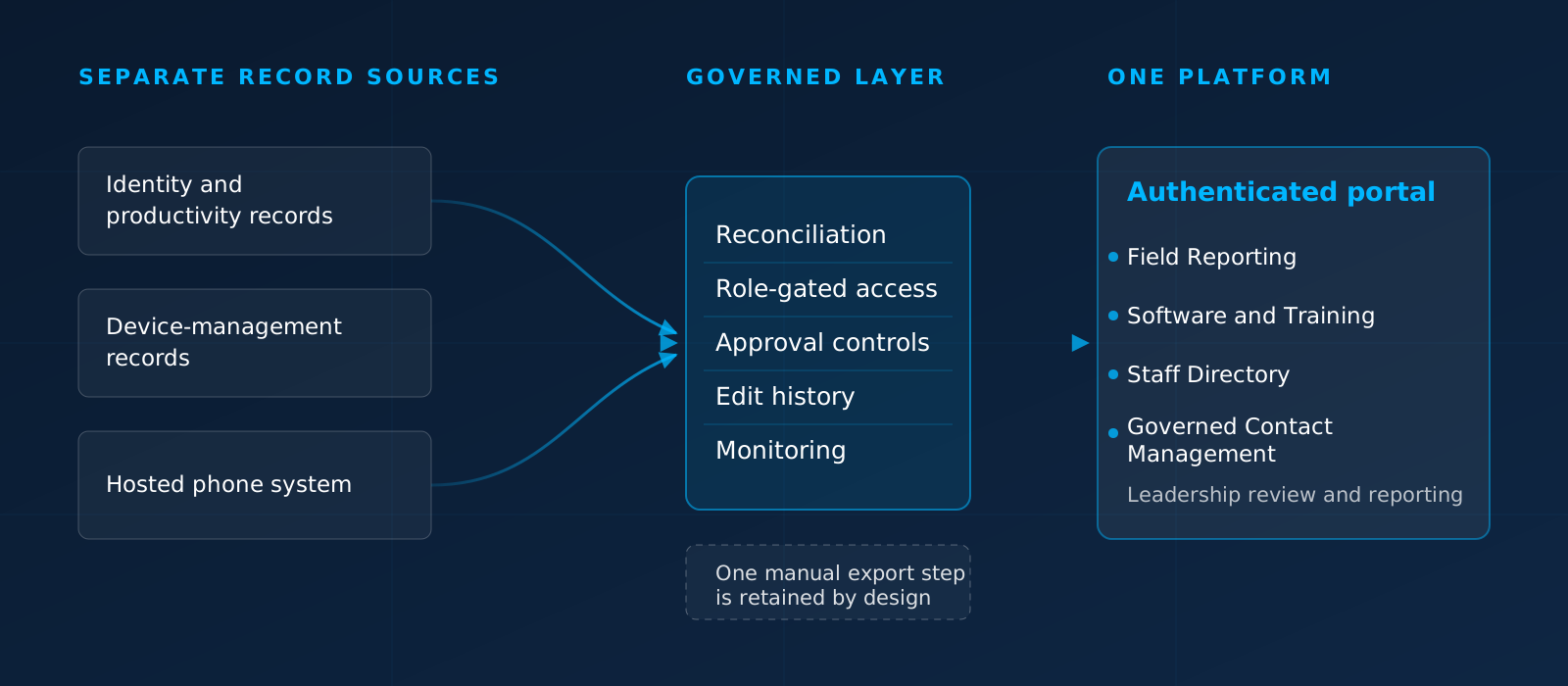
A multi-site organization needed more than a new directory or another reporting form. TechNav provided fractional CIO leadership, coordinated the existing technology environment, and built a production headquarters platform that gives staff and executive leadership a controlled way to work from shared operational information.
The problem
Important headquarters work was spread across systems that had never been designed to operate as one environment.
The staff directory was assembled manually from three separate sources: identity and productivity records, device-management data, and a hosted phone system. Field reporting created a wider challenge. Representatives needed a consistent way to record location activity, contacts, issue-related work, meetings, application activity, and questions for supervisors. Leadership needed to review that work alongside separately sourced calendar and intake information, and to see one consistent picture of activity across locations without reconciling records by hand.
The organization did not need another isolated tool. It needed accountable technology leadership to define how information should move, who should have access, where human review still belonged, and how the system would be governed after launch.
TechNav owned the technology outcome
TechNav led the engagement as the organization's fractional CIO and accountable client-side technology owner. That responsibility came before software development.
TechNav defined the operating model, architecture, access design, reporting logic, governance controls, integration boundaries, release process, monitoring approach, and recovery model. It also coordinated the capabilities and constraints of the organization's existing identity, device, phone, calendar, email, intake, and operational-data systems.
The objective was not to replace every source system. TechNav designed the governed operating layer that made those systems useful together, retained explicit manual controls where source limitations required them, and gave the organization one accountable technology design.
A production platform, not a standalone prototype
The result is a deployed headquarters portal with enterprise identity sign-in, role-gated access, structured data services, productivity-suite integrations, controlled deployment, monitoring, backups, alerts, and documented recovery procedures.
Four working areas operate inside the authenticated platform:
Field Reporting
Structured representative activity and follow-up.
Software and Training Resources
Internal staff materials.
Staff Directory
Staff identity, profile, phone, and device information.
Governed Contact Management
Controlled employer and external-contact updates.
These last two areas are separate by design. The Staff Directory handles staff records. Governed Contact Management handles external and organizational contacts through its own approval workflow.
From manual directory assembly to controlled reconciliation
Before the portal, the staff directory had to be assembled by hand from three disconnected source systems. The new workflow combines phone and device records, enriches profiles with identity data and photos, and loads the reconciled records into an authenticated, searchable Staff Directory.
The ingest process is protected so that an incomplete or unexpected update cannot overwrite good records, and the same person is matched rather than created twice. Reconciliation runs as a controlled workflow rather than a continuous feed.
Not every source system offers the same level of integration, so the design keeps a deliberate human step where a source calls for one. The portal replaces the former end-to-end manual assembly with a controlled, repeatable workflow.
From field activity to leadership review
Representatives use one structured reporting workflow to record activity at a location, contact counts, issue and meeting details, application activity, and questions for supervisors. A report can cover more than one type of activity without splitting the work across unrelated forms.
Drafts are saved on the representative's device. After submission, representatives can review and correct their own past reports, and corrections are recorded so the record stays accurate. Where a supervisor is assigned, they are notified of the change.
Questions entered for supervisors generate targeted email. Replies are captured back into the originating report, so the question, response, and edit history remain connected to the work that prompted them.
The reporting model also keeps source types distinct. Representative-entered activity appears alongside separately sourced calendar and application-intake information, allowing leadership to compare and reconcile the records without presenting either source as independently audited.
Governance built into routine work
The portal applies governance where information is entered, changed, approved, and released:
- Identity-based sign-in and role-based access control which staff and leadership functions a person can reach.
- Governed Contact Management routes proposed changes through role-based approval before publication to its users.
- Corrections to submitted reports are recorded, so the record stays accurate and traceable.
- Supervisor notification keeps a human accountability step in the workflow.
- Production operations include controlled releases, monitoring, alerts, database restore options, retention, and documented recovery steps.
These are implemented and documented controls. They are not presented as a security certification or a guarantee of uninterrupted service.
Leadership intelligence for weekly operations
The leadership layer turns structured reports into a weekly operating view. Executive leadership works from a team-level view of activity, meetings, and follow-up, with the underlying reports available when a question needs a specific answer.
A dedicated reports hub supports the leadership views and workflows the organization uses each week, covering routine review, follow-up, and export. Those views were built around the questions leadership actually asks rather than adapted from a generic reporting tool.
Different sources update on different schedules, and the platform does not present the entire environment as real time.
According to the project's operational owner, executive leadership relies on the portal's reporting as part of its operating workflow.
Verified operational outcomes
The evidence supports three clear operational changes:
- A staff directory that was formerly assembled manually from three source systems now runs through a controlled, authenticated reconciliation workflow.
- Representatives have one structured reporting process with device-local drafts, the ability to correct their own submissions, supervisor notifications, and replies connected to the originating report.
- Executive leadership uses the portal's reporting to review team activity and compare separately sourced records as part of its weekly operating routine.
The organization now has one governed headquarters platform for staff information, field reporting, leadership review, internal resources, and related contact workflows. This statement describes implemented scope and reported operational use. It does not claim universal adoption, measured productivity gains, cost reduction, or the retirement of every prior tool.
The TechNav model in practice
1. Fractional CIO leadership
TechNav defined the operating model, architecture, governance, access, continuity, and accountability. The work began with technology leadership and organizational decisions, not a software feature list.
2. Project and vendor oversight
TechNav coordinated the existing technology environment from the client's side of the table. Source-system capabilities, integration limits, release dependencies, and operating responsibilities were brought into one client-owned design.
3. Systems building
TechNav built the custom operating platform needed to put that design into production. The system connects workflows and controls that off-the-shelf tools did not provide as one governed experience. This case study makes no claim that artificial intelligence operates inside the production portal.
Most fractional CIOs stop at advice. TechNav leads the technology strategy, manages the delivery environment, and builds the custom systems needed when the operating model calls for them.
Start with a systems-mapping conversation
If important work is split across directories, forms, email, calendars, reporting tools, and manual reconciliation, the first step is to map the operating system behind the work.
Talk with TechNav about the decisions, ownership, controls, and custom systems your organization needs.